Free resource

Put the house rules in writing.

A share house agreement sets out six things between housemates: rent, bills, cleaning, guests, notice and bond. It sits alongside your lease rather than replacing it.

Homee share house agreement

PDF · 2 pages · free

Rent
Bills
Cleaning
Guests
Notice
Bond

What it covers

What each clause covers

Six things it settles.

Rent

Who pays what each week, on which day, and to whom. If one person is the head tenant, it records that the others pay them and they pay the landlord.

Bills

Which bills are split (electricity, gas, water usage, internet), how they are split, and who holds the accounts.

Cleaning

A simple roster or a shared standard for the kitchen, bathroom and living areas, and what happens when it is not met.

Guests

How many nights a week a guest can stay before it becomes a conversation, and whether long-term partners contribute to bills.

Notice

How much notice each person gives before moving out, so the others have time to find a replacement. Two to four weeks is typical.

Bond

How much each person has paid, that it has been lodged with the state bond authority, and how it is returned when someone leaves.

Why it matters

Why the lease is not enough

Your lease (or rental agreement) is between the tenants and the landlord. It says nothing about who cleans the bathroom, whether partners can stay four nights a week, or how the internet bill is split. Those are the things that actually end share houses, and they are what this agreement covers.

It is a plain-English document you fill in together before anyone moves in, and it matters most when one person is the head tenant and the others are sub-tenants or lodgers, because it may be the only written record of what was agreed.

The one thing that is not negotiable: the bond goes to the state bond authority, never into a housemate's account.

Where the bond goes

Four rules, every state.

1
Lodged with the state bond authority, in each tenant's name
2
Never into a housemate's personal account
3
Ask for the lodgement receipt before you hand over keys
4
Cap and process differ by state, see below

State by state

Who looks after bonds where you live

Tenancy law is state-based and decides what this agreement cannot, such as the bond cap and notice periods. Check the official body for your state.

State or territoryOfficial body
New South WalesNSW Fair Trading (bond cap 4 weeks, lodged via Rental Bonds Online)
VictoriaConsumer Affairs Victoria and the Residential Tenancies Bond Authority
QueenslandResidential Tenancies Authority (RTA)
Western AustraliaConsumer Protection WA (Bond Administrator)
South AustraliaConsumer and Business Services (CBS)
ACTAccess Canberra and the ACT Civil and Administrative Tribunal
TasmaniaConsumer, Building and Occupational Services (Rental Deposit Authority)
Northern TerritoryConsumer Affairs NT

FAQ

Share house agreements: FAQs

Still stuck? Email contact@homeeapp.co

Is a share house agreement legally binding?

It is a written record of what you agreed to and can be relied on in a dispute between housemates, but it sits alongside the lease and cannot override state tenancy law.

Do I still need it if we are all on the lease?

Yes. The lease covers your relationship with the landlord. It says nothing about cleaning, guests, bills or notice between housemates.

Can I edit the template?

Yes. It is a starting point. Add or remove clauses to suit your house, and make sure everyone signs the final version.

Where should the bond go?

With the state bond authority, in each tenant's name. Never in a housemate's personal account.

Homee

Find your people. Then your place.

Free on iPhone and Android. See who lives there, match on lifestyle, chat before you sign.

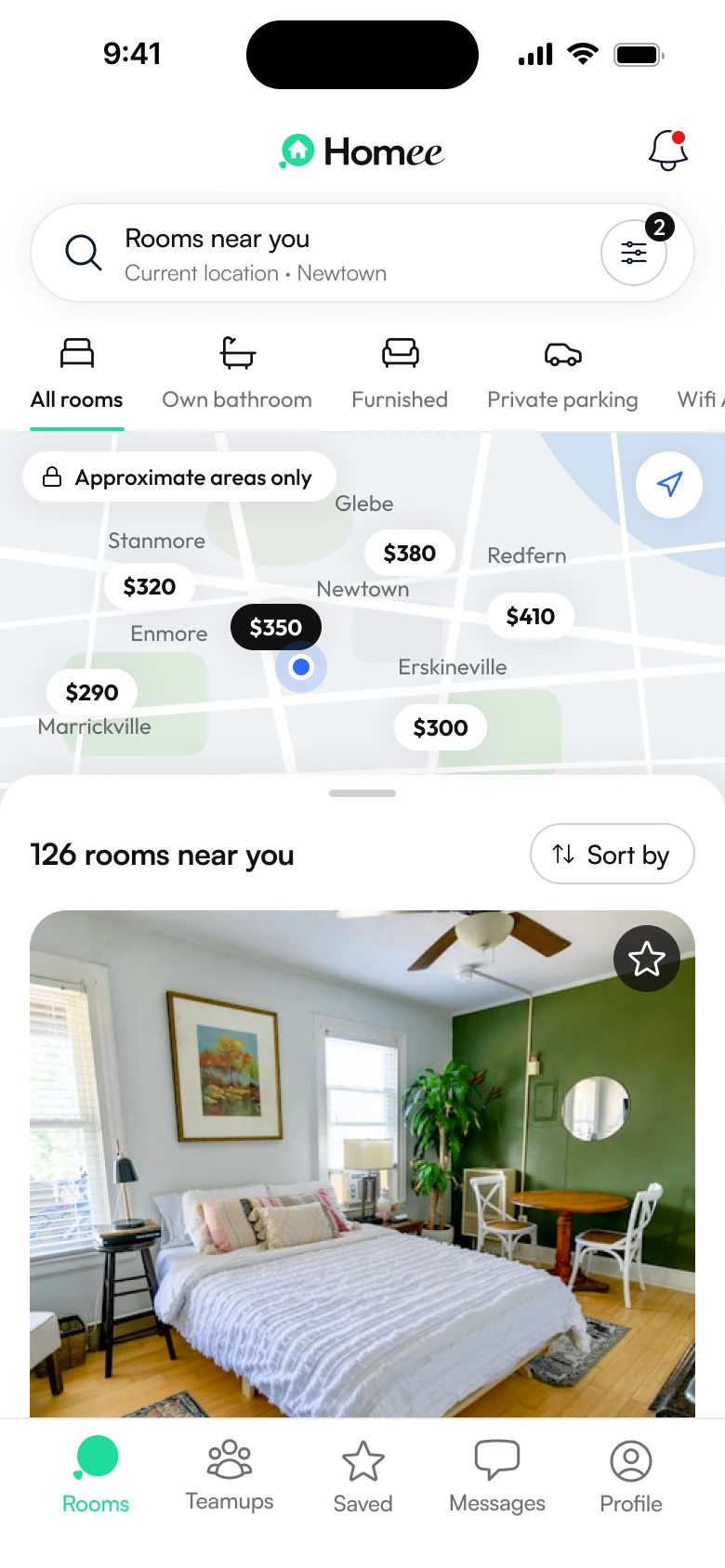
Homee app: rooms near you on a map, with weekly prices